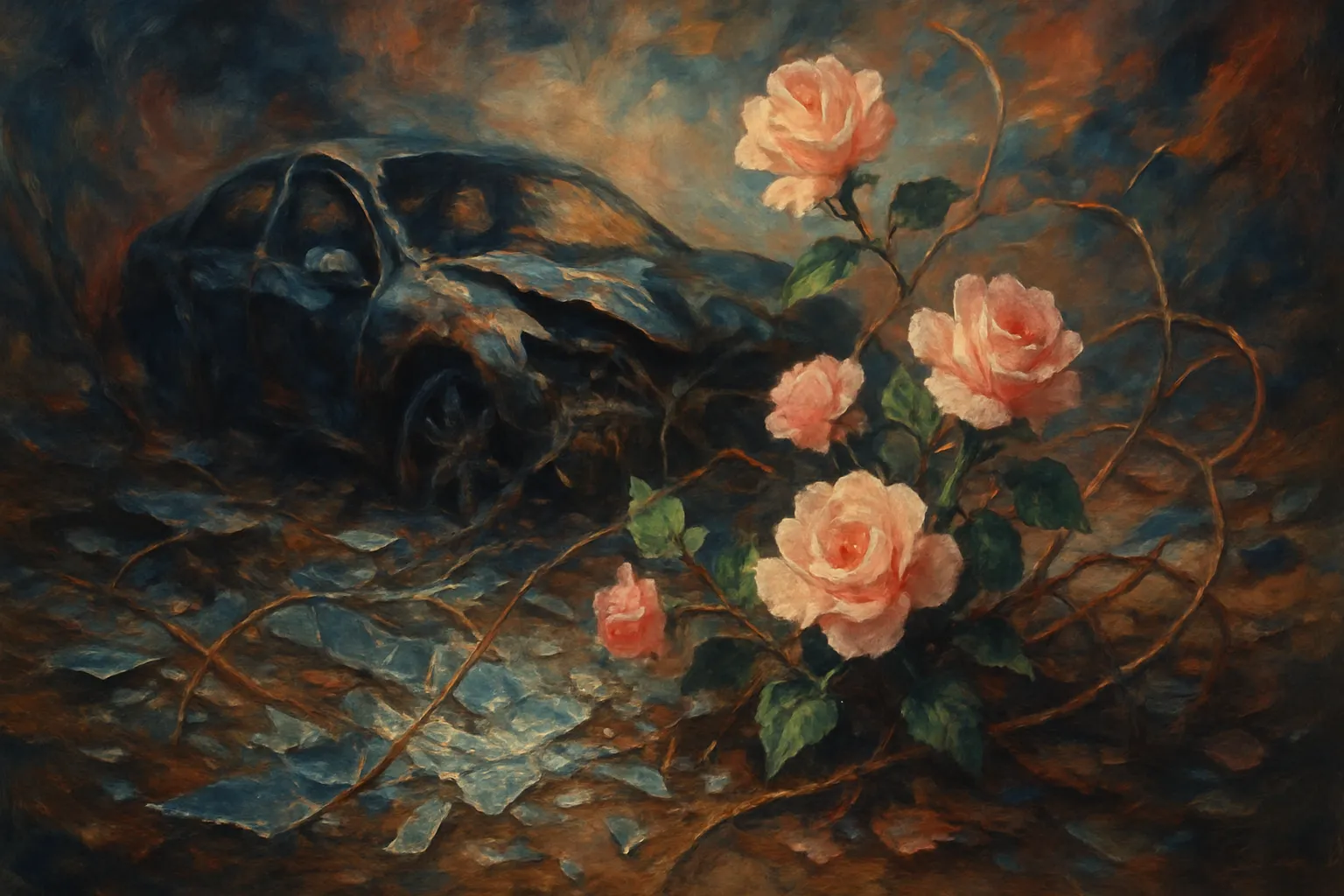
Love isn't a crash; it's the aftermath. The narrator processes his emotional life—past intimacy and present trauma—through the cynical, sterile lens of military procedure and professional diagnosis. Love is recast not as an event, but as the enduring, paradoxical state of perpetual, conscious survival following irreparable damage.
The Aftermath
Woke up cold in my chair, again. My machine has no answer. It just runs the clock down. Love isn’t a car crash, son. Love is the impact you walk away from— the sound of your own skull hitting the airbag at fifty. Glass shatters; you don't feel the cut then. The hurt comes later, the desperate, useless need to suture the things that won't mend.
My therapy notes glow hollow. There's more silent space between the copper wires and the logic board than there is between the impulse to help and the dead weight in my fingertips.
Somewhere lies a dream I filed away. A cannery that tells me the truth, hard-boiled, preserved in brine. I look into her eyes and see the same blackest void I pulled out of myself in Portugal.
I see the spiraling incense— just smoke, just memory. Love is like picking glass out of scar tissue. It's that secondary tickle, the relief that confirms the damage. Love is when you realize you’re dead, and that you're not getting any deader. The flatline of existence.
It’s funny that way. It leaves you with the feeling that all the time you spent staring into her eyes— you were actually staring into yours, tracing the precise fracture line, finally visible. It’s funny how that still stings.
Interpretation
The opening contrasts the immediate, decisive violence of the car crash ("impact... airbag at fifty") with the lingering, abstract pain of relationships. The narrator dismisses the romantic notion of a crash, stating the real agony is the "useless need to suture the things that won't mend"—a direct reference to both physical wounds and the professional limits of therapy. The "machine" replacing the laptop underscores the sterile, bureaucratic environment of his current life, which offers no comfort, only the relentless passage of time ("runs the clock down").
The professional paralysis is evident in the line about the copper wires and the distance between the impulse to help and the dead weight in my fingertips. This signifies a profound compassion fatigue and disassociation, common in trauma survivors and social workers. The emotional truth is filed away, canned, and preserved in brine—a "hard-boiled" defense mechanism that resists vulnerability. The substitution of Portugal for a combat zone reframes the emotional void as something carried from a distant, non-military assignment, emphasizing that his trauma is internal and existential, not merely related to direct conflict.
The final stanzas define love using visceral, medicalized metaphors: "picking glass out of scar tissue" and the "secondary tickle" of confirmed damage. This confirms that intimacy now only serves to validate his past suffering. The ending achieves maximum impact by revealing the ultimate narcissistic irony: his intense connection was never about the other person but was a lifelong effort to map his own internal "precise fracture line." The final word, "stings," provides the last, small, persistent physical manifestation of pain, confirming that the professional and military defenses have failed to eliminate the core hurt.
Comments
Post a Comment