All systems fail, and the illusion of cleanliness is the worst kind of lie. This three-line text is a brutal and cynical meditation on human attempts at self-improvement and perfection, framing the subject as a flawed, mechanical system (the carwash). The narrator rejects the notion of superficial change, asserting that the "underside"—the core, foundational reality of the self—is permanently stained. This introduces a theme of inescapable, existential residue that defies all attempts at absolution or redemption.
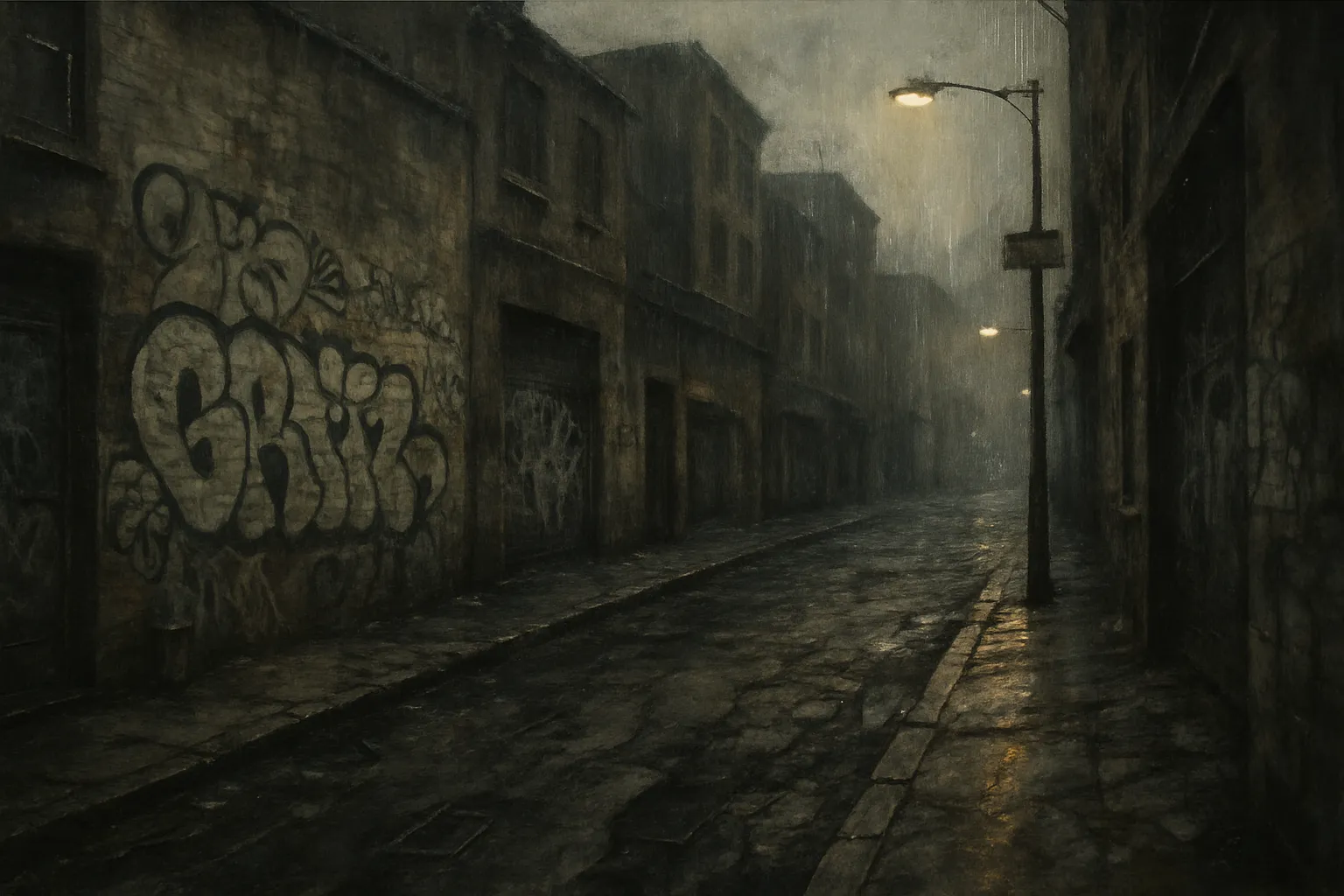
Grime
She reminds me of a carwash.
A complex, loud machine,
designed for the fetish
of immaculate surfaces.
No matter how many times through,
the cycle repeats its meaningless
project of absolution.
The exterior gleams—
A perfect, temporary lie.
But the underside,
the crucial, unseen facticity of the chassis,
is intentionally never clean.
The essential, unavoidable grime
is the preferred state.
The dark, necessary corruption remains.
(She pays extra for the stains.)
Interpretation
This text functions as a nihilistic existential aphorism, equating the human condition with a mechanical process that is inherently, structurally flawed. The analysis focuses on the futility of repeated action and the permanence of facticity.
The comparison of "She" to a "carwash" immediately objectifies the subject, defining her not by identity but by function—a "complex, loud machine." This machine is dedicated to the meaningless project of achieving an "immaculate surface." This cyclical, repetitive action ("No matter how many times through") emphasizes the Sisyphusian futility of self-improvement or moral purging. The exterior gleam is the public self, the conscious performance, dismissed as a "perfect, temporary lie."
The core philosophical weight rests on the "underside"—the unseen, foundational, and most authentic part of the machine. This is the facticity of the subject, the concrete historical and psychological baggage that precedes and limits all future choice. The carwash machine (the self) cannot change this foundation; the "crucial, unseen facticity of the chassis" remains dirty.
The conclusion is an assertion of existential residue. The "essential, unavoidable grime" confirms that the effort to attain cleanliness (or innocence/perfection) is doomed to fail. There is always a remainder, a dirty unconscious or a permanent historical stain that the mechanism cannot reach. The final, terse observation, "(There is always residue.)," is the cynical, Rollins-esque final word: a rejection of absolution, leaving the subject condemned to the reality of their own structural impurity.
Comments
Post a Comment