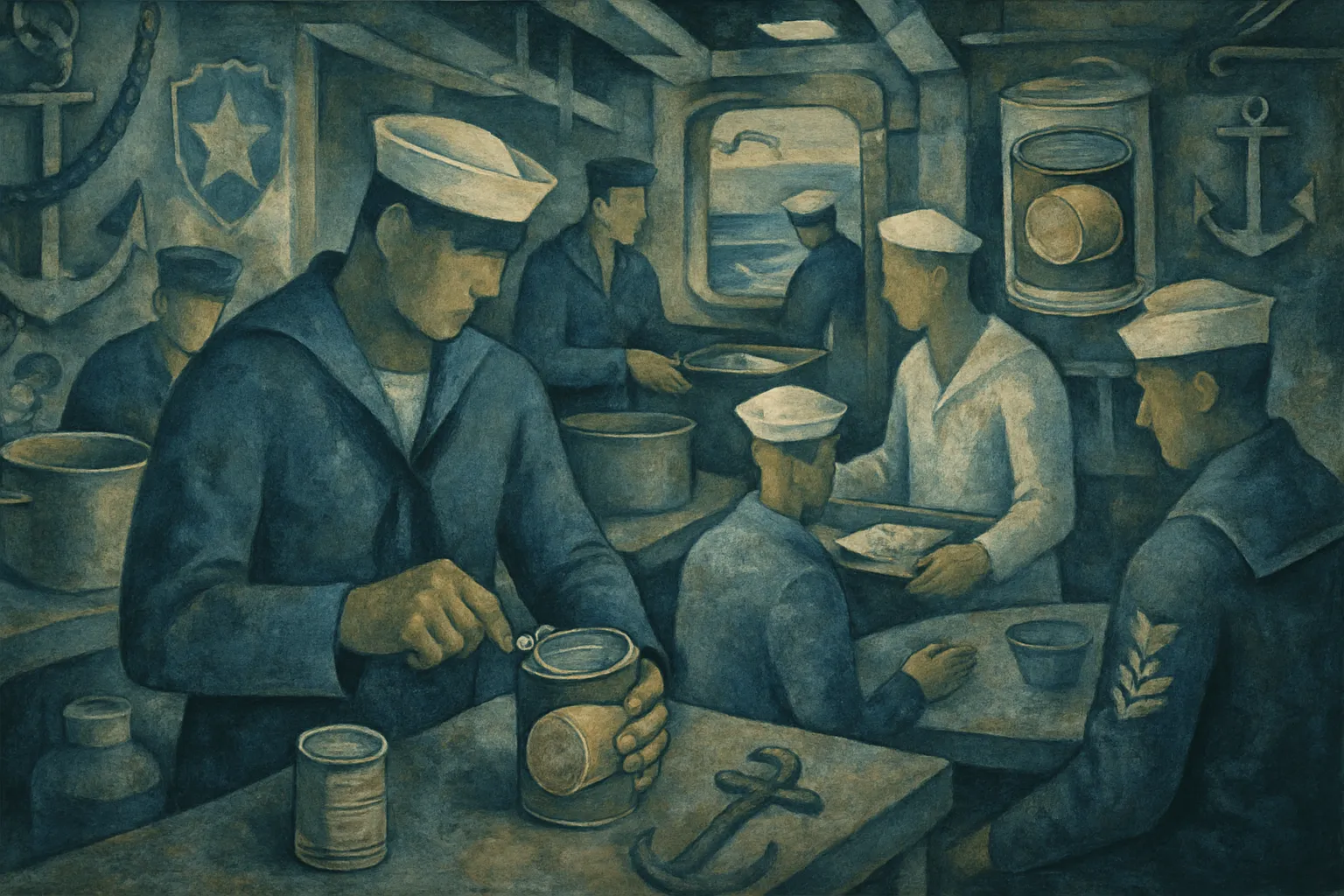
Listen closely, and you will hear the low, metallic hum of true naval service. The speaker juxtaposes a single, minor injury sustained on the messdeck—slicing canned ham—with a civilian's past critique of his "soft" hands. The resulting tone is one of earned, weary cynicism, where the physical marks of service are recognized as the product of "sanctified duty" in food preparation, not heroic combat. It is an ironic salute to the lowest, most persistent form of necessary labor.
Canned Meat
I earned a Purple Heart—for ham
—slicing canned ham during mid-watch prep.
The wound was deep. Not shrapnel.
Just pork, chopped, and processed.
I still hear that civilian judgment,
years before the fleet.
"Let me see your hands," she said.
"Soft, like you haven't done a day's work."
A clean hit, drawing blood years later.
Now I have sailor's hands. Forged not in granite,
but the sanctified duty of food service.
They are machined by the repetitive,
frantic rhythm of carving subsidized protein,
and permanently stained by the institutional grease
that wins every war.
Interpretation
The body is the primary site of inscription for this machine. The hands are not instruments of sovereign action but components of an industrial process: they are not "forged in granite," the raw material of mythology, but are "machined" by the "repetitive, frantic rhythm" of low-grade labor. This is the ultimate deterritorialization of military duty—reducing the epic combat narrative to the slicing of "pork, chopped, and processed."
The "Purple Heart—for ham" represents the complete collapse of the honorific flow (military glory) into the flow of subsidized protein (messdeck production). The wound is necessary because it fulfills the machine's requirement for a body marked by labor. The prior civilian judgment ("Soft, like you haven't done a day's work") serves as the external cut that drives the subject to seek inscription within the military structure. The subsequent wound, though minor, is a "clean hit," a successful inscription that proves the hands have been integrated into the machine's production line.
he hands are "permanently stained by the institutional grease that wins every war." This grease is the true antagonist and final product: the viscous, inescapable flow of bureaucracy, inertia, and mediocrity. The speaker becomes a "monument to the necessity of the low bar," accepting that the subject's true value lies not in transcending the system, but in perfectly servicing its most minimal requirements. The sailor is a BwO (Body without Organs) marked not by sovereign freedom, but by the relentless, non-heroic production of institutional maintenance.
Comments
Post a Comment