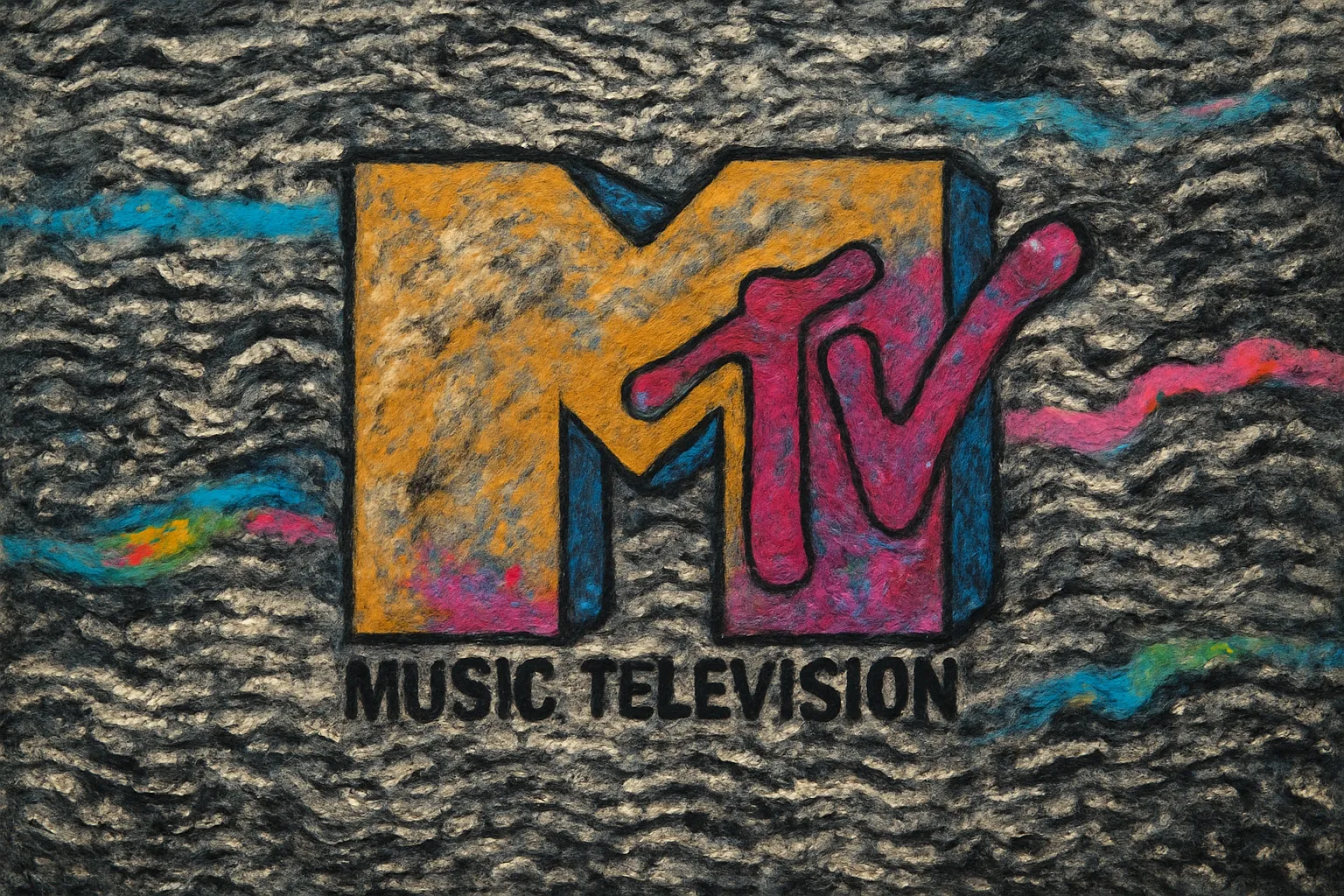
Every time the TV flashes, another piece of your soul dies in a clean, well-lit studio. This text is a brutal and visceral rejection of mediated reality, channeling fury against consumer culture and manufactured perfection. It frames the media image as a lie—a "perfect surface"—and proposes an act of shocking violence not as an expression of misogyny, but as a desperate philosophical attempt to achieve authenticity. The hammer is the tool of the anti-capitalist surgeon, seeking to prove that beneath the commodity-mask, there still exists a painful, honest, organic being.
MTV Static
I saw a pretty girl on MTV. Another perfect surface, another piece of bright, engineered trash. Her smile was a commodity, her eyes, flawless windows to an empty factory floor.
I wanted to take a claw hammer to her face. Not for hate. Not for cruelty. But to breach the code. To rip the synthetic fiber of the broadcast and show her— show us all— what she is missing beneath the gloss, beneath the makeup, beneath the million-dollar lie of the network.
I wanted to prove that there is bone. That there is a painful, jagged edge to the human thing, and that the only honest flow is the blood that proves you haven't been manufactured yet. I wanted her to feel the weight of existence.
Interpretation
This text is a concentrated statement on alienation, authenticity, and the desire to puncture the capitalist code inherent in media spectacle. The narrator is locked in a desperate search for the "real" in a world saturated by manufactured flows.
The poem begins with the immediate observation of the Commodity Machine at work. The girl is reduced entirely to a "perfect surface," and her inherent value is negated by her external function: "another piece of bright, engineered trash." Her smile is defined explicitly as a "commodity," a piece of value produced for exchange rather than genuine emotion. Her eyes—typically a source of individuality—are dismissed as "flawless windows / to an empty factory floor," signifying that her subjectivity has been entirely replaced by commercial production.
The narrator's violent impulse—"I wanted to take a claw hammer to / her face"—is a symbolic, existential response to this profound alienation. This is not casual aggression, but a desire to "breach the code" of the media machine. The face, in this context, is the ultimate mask or territory imposed by the market. The hammer is the tool of deterritorialization, seeking to dismantle the synthetic surface ("rip the synthetic fiber of the broadcast"). The goal is to reveal "what she is missing" and, by extension, what the viewer is missing: the messy, painful truth of organic existence.
The true aim of the violence is articulated in the final stanza: to prove the existence of bone and blood. Bone represents immutable facticity and physical reality, while blood is the "only honest flow" left in the mechanical landscape. This flow proves the subject "haven't been manufactured yet." The narrator seeks to force the girl to feel the "weight of existence," a direct reference to the Sartrean burden of conscious being. The proposed action is a nihilistic, yet desperate, attempt to force authenticity by substituting the sterile media flow with a visceral, painful, and ultimately real flow of life. The violence is an an act of twisted grace, intending to break the subject out of the false consciousness imposed by the television screen.
Comments
Post a Comment