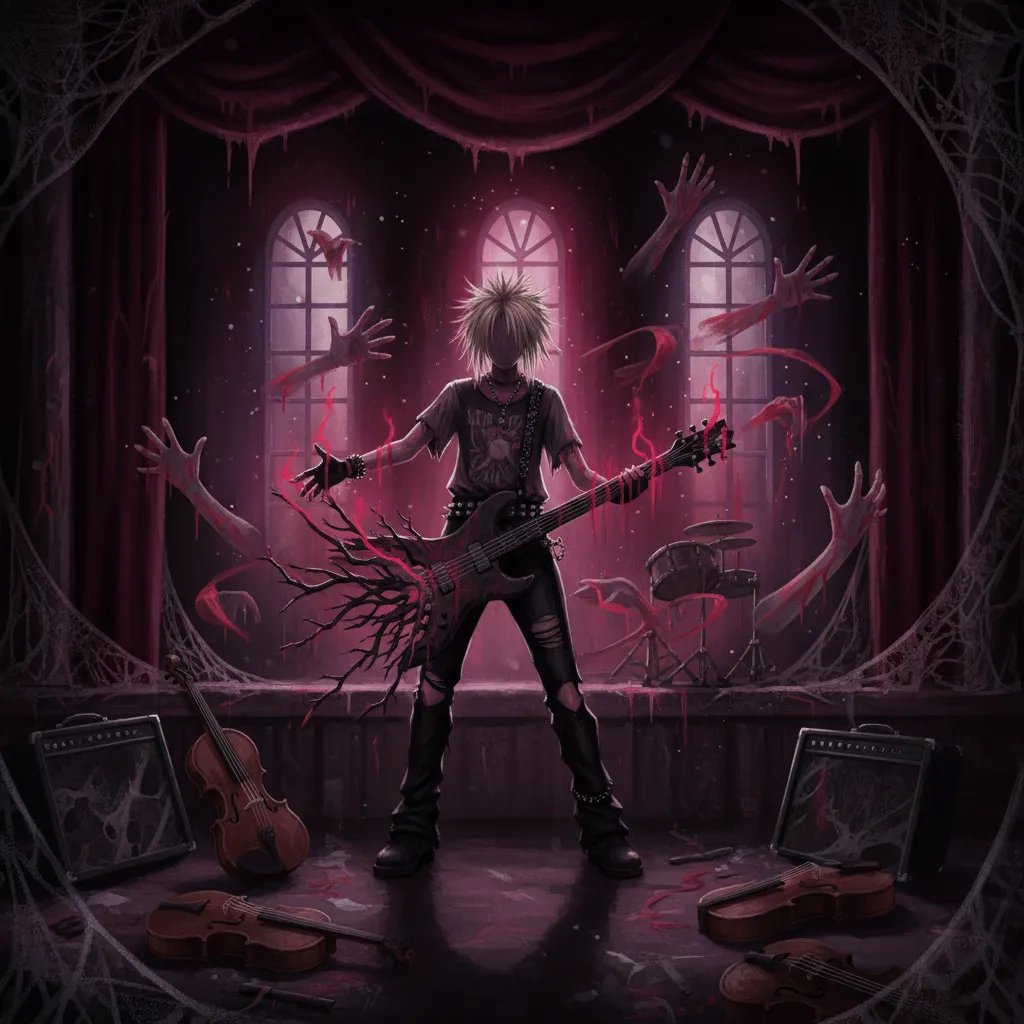
There’s a certain violence in the way contemporary poetry addresses societal issues—like a flag set on fire, or a ghost screaming through the static of culture. “Fuck Avril Lavigne” is a poem that doesn’t flinch. It spits out the names of nations, calls out the commodification of suffering, and rages against the borders that define and divide us. The poem’s lines—“Fuck all flags. / Fuck all landlocked/Nation/Culture/”—echo in my head, a raw refusal to accept the world as it is. This is a poem about human trafficking, about the blood on our hands, about the way politics and pop culture twist together until even the last living punk is just another brand. It’s a text that refuses comfort, using poetic devices in modern poetry—disruption, fragmentation, profanity—to force us to look at what we’d rather ignore.
Fuck Avril Lavigne
Fuck you and your flag.
And on behalf of our flag. 🏴☠️
Fuck all flags.
Fuck all landlocked/Nation/Culture/
Region/ideological/Boarder/Piously-centric-mother-fuckers.
Fuck Russia and Ukraine for the adult/child sex slave they provide to the world and themselves.
And fuck the first world motherfuckers who buy humans at profit
-
Truth is the blood on our hands is like a cities budget for rape kits a tax/responsibility/duty on all.
We need to kill all martyrs until we have no more examples left. This, Herod was right for the wrong reasons.
If we don’t change we are doomed to become our parents. No one wants that.
And fuck your hipster after-culture where Avril Lavigne is the last living punk.
Cartographies: Mapping Rage
To read “Fuck Avril Lavigne” is to enter a landscape where meaning is always on the move, where flags and borders are not just physical but psychic barricades. The poem splinters identity—nation, culture, ideology—into fragments, refusing to let any one piece settle into a comfortable narrative. Here, the poetic device of direct address (“Fuck you and your flag”) is a weapon, a way to tear through the surface of polite discourse and reveal the flows of violence beneath. The poem’s invocation of human trafficking is not just a critique of politics, but a map of complicity: “the blood on our hands is like a cities budget for rape kits a tax/responsibility/duty on all.” This is a cartography of collective guilt, a way of tracing how suffering is distributed, bought, and sold across the globe.
But the poem doesn’t stop at critique. It mutates, calling for the destruction of martyrs, the end of inherited trauma—“We need to kill all martyrs until we have no more examples left.” The poem is a machine for breaking down the stories we inherit, the myths that keep us trapped in cycles of violence and consumption. The final line—“fuck your hipster after-culture where Avril Lavigne is the last living punk”—is a howl against the commodification of rebellion itself, a refusal to let even punk become a safe, sellable identity. The poem’s form—its abrupt breaks, its refusal of closure—mirrors its content, creating a space where new concepts can emerge from the ruins of the old. This is contemporary poetry addressing societal issues not by offering answers, but by refusing to let us look away.
Breaking the Martyr Machine
When I first read the line, “We need to kill all martyrs until we have no more examples left,” I felt a jolt—like the poem was reaching through me, tearing at all the old posters I’d taped to my bedroom wall. This is not just a rejection of Avril Lavigne as the “last living punk,” but a call to dismantle the entire machinery that turns pain into spectacle, rebellion into brand, and trauma into inheritance. We don’t look for a single hidden meaning, but instead trace the cracks, the ruptures, the ghosts that haunt the text. Our unconscious isn’t a secret to be uncovered; it’s a haunted house, a parade of fragments and contradictions, where every martyr is another room we’re forced to walk through again and again.
The poem’s refusal to provide a martyr is a refusal to let pain be turned into currency. “If we don’t change we are doomed to become our parents. No one wants that.” The poem knows that the martyr machine is fueled by repetition—by the way we inherit wounds, by the way we turn every act of rebellion into a new rule, a new flag to burn. The unconscious isn’t about finding the true meaning beneath the surface; it’s about letting the poem splinter, letting it refuse every attempt to centralize or stabilize its message.
The poem’s plea to destroy martyrdom is a plea to break the cycles of inherited trauma and celebrity culture, to let the unconscious remain fractured and alive, full of contradictions and possibilities. This refusal of stable symbolic orders. The poem doesn’t want to be healed, or explained, or turned into a new example. It wants to stay broken, to keep burning, to keep searching for new forms of resistance in the ruins of the martyr machine.
Comments
Post a Comment