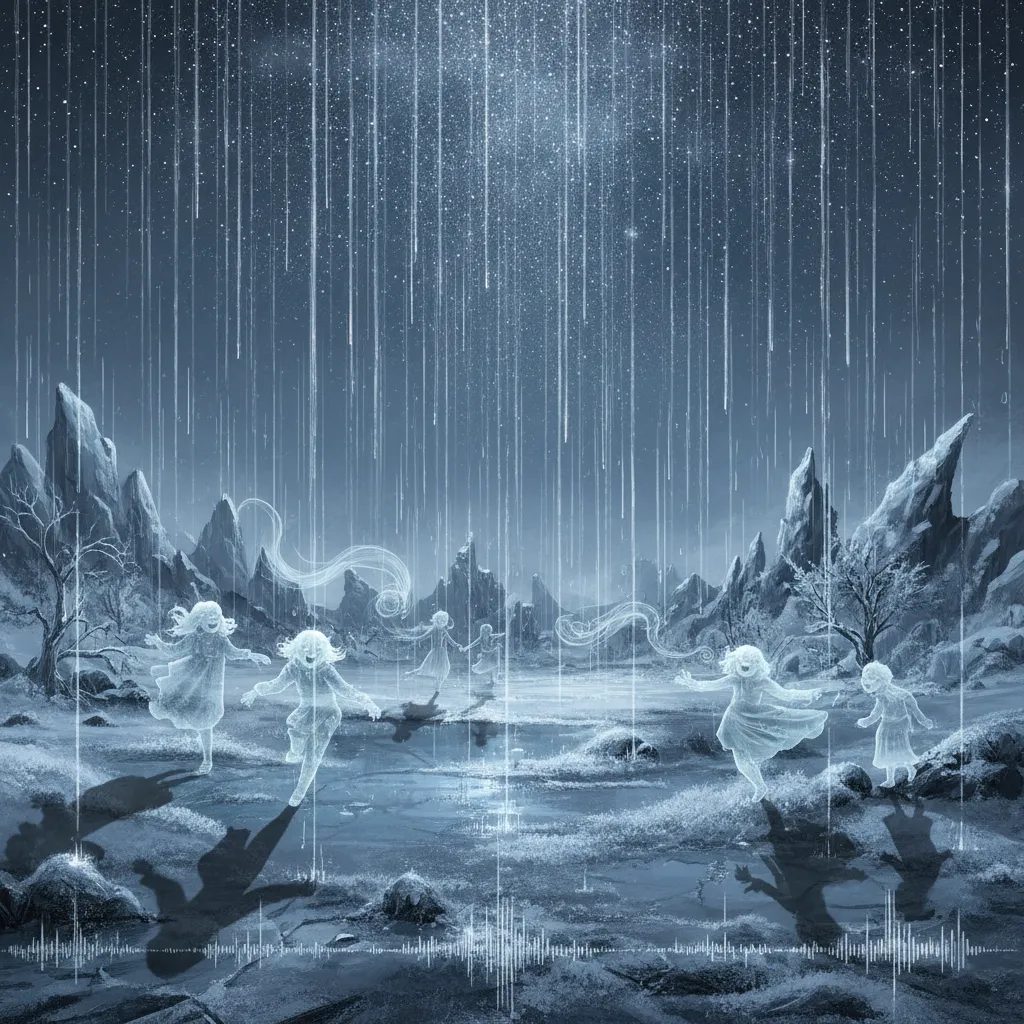
The strangest rainstorm I ever walked through wasn’t on any weather app—it was the inside of my own mind, reading a poem that felt less like shelter and more like exposure. In sharing "Cold Rain" here, I’m inviting you into that weather system: unpredictable, haunting, and impossible to ignore.
The Relentless Weather
The best poetry is not a comforting shelter; it's a relentless weather system, an invitation to the profound discomfort of being alive. When I first encountered the Cold Rain Poem, I was struck by how it refuses to offer warmth or refuge. Instead, it drenches the reader in a storm of feeling—one that is more drop than shelter, more exposure than escape. This is poetry as a psychic downpour, challenging us to face the elemental forces of existence rather than hiding from them. The poem’s poetic imagery and cosmic indifference are not just themes—they are the weather itself, battering the reader with every line.
Cold Rain
falling from the stars
like the laughter of a child
slowly ripping away at me
Eternity slipping
stealthily through the shadow of death
recklessly, I follow
into the horror of the night
Useless, I struggle
crying blood
envisioning a child with his face ripped away
There is a rainbow after this storm
but gravity eventually rapes the colors away
and the blackness returns
At first glance, Cold Rain feels like a direct confrontation with discomfort and darkness. The poem opens with rain "falling from the stars," immediately connecting the reader to the vast, uncaring universe—a classic example of cosmic indifference as a poetry theme. This is not the gentle rain of renewal, but a cold, relentless force that strips away comfort and certainty. The familiar image of a child’s laughter is twisted, becoming something that "slowly rips away at me." Here, innocence itself is rendered corrosive, a force that erodes rather than heals.
What stands out to me is the poem’s refusal to offer easy answers or simple metaphors. The poetic imagery is raw and unsettling: "crying blood," "a child with his face ripped away." These images do not invite us to interpret them as symbols of hope or redemption. Instead, they force us to sit with the horror and the loss, to accept the psychic weight of mortality and meaninglessness. The poem’s storm is not just outside—it is inside, tearing at the very fabric of the self.
In the context of poetry themes, Cold Rain is a study in cosmic indifference and psychological gravity. The speaker is not simply a victim of trauma, but a participant in a process of dissolution. The line "recklessly, I follow / into the horror of the night" suggests an almost willing surrender to the forces that unmake us. This echoes the schizoanalytic idea of the Erosion Machine, where the self is not shattered by a single blow, but gradually worn away by the indifferent passage of time and the universe’s lack of concern.
The poem’s climax arrives with the vision of a "child with his face ripped away"—a disturbing image that signals the loss of identity, innocence, and external meaning. The rainbow, usually a symbol of hope, is here only a temporary illusion. Gravity, acting as both a physical and psychic force, "rapes the colors away," leaving only blackness. This is not just a metaphor for depression or despair; it is a statement about the nature of reality itself. Even the brightest moments are subject to the same relentless forces that govern the stars and the rain.
Cold Rain disrupts the familiar function of poetry as comfort. It acts as a force of nature, battering the reader with images and ideas that refuse to resolve into easy meaning. The poem’s poetic imagery and cosmic indifference are not just themes to be analyzed—they are experiences to be endured. In this way, the poem invites us to confront the discomfort of being alive, to recognize that sometimes, the only shelter is the storm itself.
Comments
Post a Comment