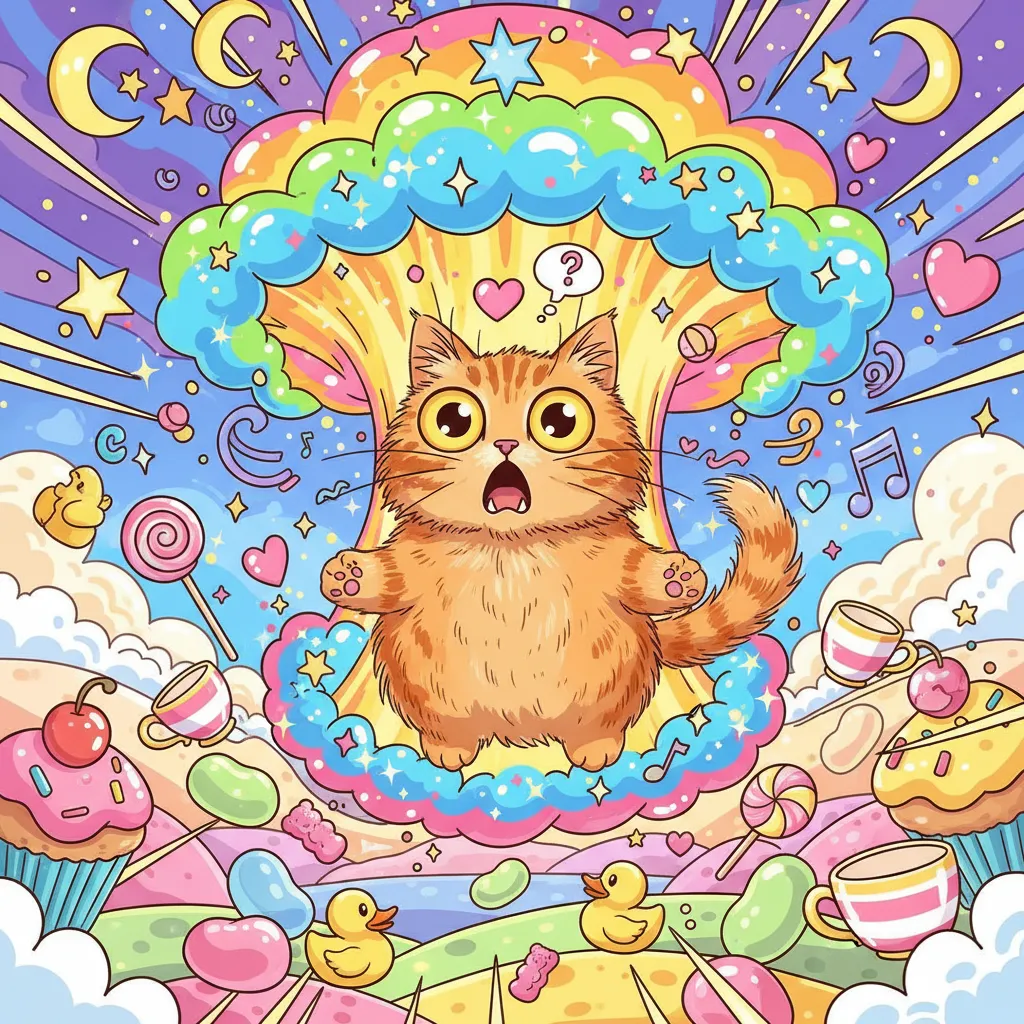
In "Cat Go Boom," the poem navigates the chaotic interplay of language, identity, and the relentless pressure of societal expectations. The imagery of a cat in a microwave serves as a provocative metaphor for the tension between creativity and conformity, highlighting the absurdity of maintaining the "status quo" in a world that demands transformation. The poem captures the struggle against the encroaching forces of control and the desire to break free from the constraints that define existence. Through its fragmented structure and urgent tone, it reflects the dissonance of a mind grappling with the pressures of change and the elusive nature of identity.
Cat Go Boom
Play with language like a cat in a
microwave - push syllables in a mad
dash against encroaching radiation
-words are the pressure to bust
against capacity
WE MUST MAINTAIN THE STATUS QUO!
WE MUST MAINTAIN THE STATUS QUO!
WE MUST MAINTAIN THE STATUS QUO!
Change is change through force
The results made way and configured against
a to be determined reference point
where the cat used to be
and cannot be said to reside
any longer
Interpretation
The poem unfolds as a vivid exploration of the experience, where language becomes a battleground for identity and expression. The metaphor of a "cat in a microwave" encapsulates the absurdity of existence under the relentless pressure of societal norms, suggesting a violent collision between the organic and the mechanical. The frantic play with language mirrors the chaotic flows of desire, pushing against the constraints of meaning and expectation.
The repetition of "WE MUST MAINTAIN THE STATUS QUO!" serves as a haunting refrain, echoing the oppressive forces that seek to stifle creativity and individuality. This insistence on conformity highlights the tension between the desire for change and the fear of annihilation, as the speaker grapples with the implications of transformation. The phrase becomes a mantra of resistance, yet it also reveals the internalized compulsion to adhere to societal dictates, reflecting the struggle against the molar structures that seek to define and limit existence.
As the poem progresses, the notion of "change through force" emerges, suggesting that transformation is not a gentle evolution but a violent rupture from the past. The reference to a "to be determined reference point" underscores the instability of identity, where the self is in constant flux, unable to find a fixed location. The cat, once a symbol of independence and playfulness, becomes a casualty of the microwave's oppressive heat, representing the loss of agency in the face of societal expectations.
In the final lines, the assertion that the cat "cannot be said to reside any longer" encapsulates the notion of deterritorialization, where the self is fragmented and dispersed, unable to conform to a singular identity. The poem ultimately serves as a powerful commentary on the complexities of existence, urging a reconsideration of the forces that shape our identities and the potential for liberation through the embrace of chaos and multiplicity.
Comments
Post a Comment