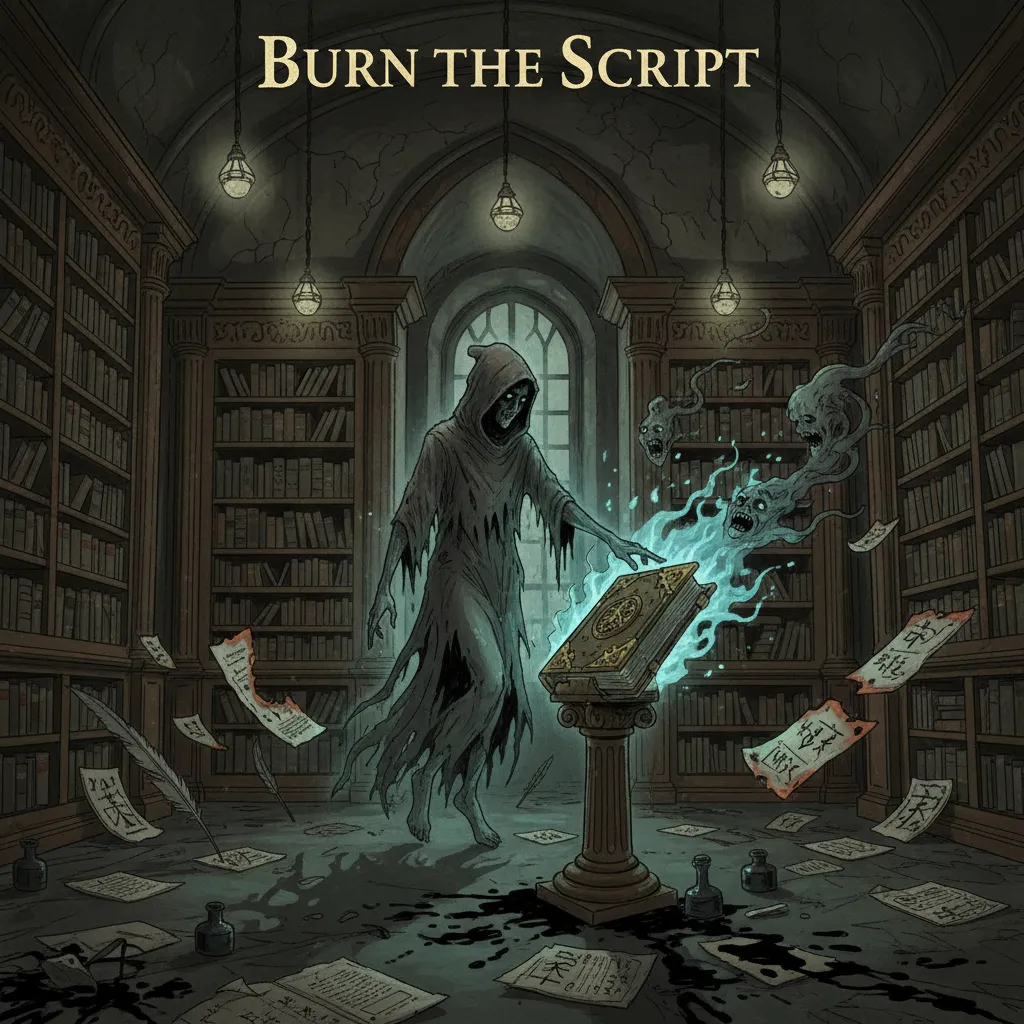
The first time I read a poem that snarled back at convention, it was like the rules buckled and muttered, 'Fine, rewrite me.' There's a moment when poetry becomes less mirror, more sledgehammer—when it claws through the tapestries of consumer scripts and brings the messy, untamed self to daylight. 'I want liberation. Mutual association.' These aren't just lines; they crack open the very idea of connection, throwing duty and history to the wind. Modern poetry, I realize, is less about reciting what came before and more about burning the blueprint—demanding we participate in creation, collision, and unsanctioned freedom.
Motherfucking Romeo
I want liberation. Mutual association. Fuck cohesion. Fuck duty to obligation. Let’s not plan our connection. Let’s abandon history and burn consumer culture's scripts. Love was not what killed Romeo and Juliet, but the “bros before hoes” imperative. The tragedy was not about love but submission to culture's mores.
Poetry as Cultural Sideshow
I want liberation. Mutual association. The poem opens with a demand that feels more like a manifesto than a confession, a call to arms against the invisible scripts that choreograph our connections. I remember the day I saw a friend scribble a poem on a gas station receipt, only to leave it wedged in the snack rack—an unplanned cultural protest, a refusal to let poetry be precious or contained. This poem, like that moment, is a hybrid form: part rebellion, part performance, and part digital revolution poetry, echoing the unpredictable, fragmented narratives that define contemporary poetic expressions of rebellion. Here, disappointment is not the villain; the real enemy is conformity—the silent force behind ‘duty’ and ‘cohesion’ in both poetry and society. As Ocean Vuong says,
To be contemporary is, in itself, a protest.
The poem’s refusal of obligation and embrace of new forms mirrors the way modern poets use digital platforms and unexpected settings to disrupt boundaries, making every act of writing a potential sideshow and every connection a playground.
Burn the Script
This poem is a wild circuit, an engine that refuses to run on the old fuels of narrative and duty. Its hybrid form—part rant, part confession, part cultural critique—mirrors the digital revolution poetry of 2025, where boundaries dissolve and new genres emerge from the ruins of the old. The poem’s opening lines are not just a rejection of tradition but an invitation to mutual association, a space where connection is unplanned and history is abandoned. In this playground, the poem splinters the myth of tragic love, exposing not disappointment but the machinery of conformity: the “bros before hoes” imperative, the scripts of consumer culture, the invisible hands that guide us toward cohesion and away from wildness. Here, poetry is not a product but a performance, a sideshow act left behind on a gas station receipt, refusing neat packaging or singular meaning. The poem’s rebellion is not just in its language but in its structure—fragmented, nonlinear, open to contradiction—making it a living example of contemporary poetic expressions of rebellion. Schizoanalysis gives us the tools to assemble meaning from these fragments, to see the poem not as a closed system but as a network of wild connections, each line a new node in the ongoing experiment of hybrid forms poetry.
In a world where love is often staged and obligation is mistaken for intimacy, the poem’s voice rages against the machinery of tradition and consumer culture. This is not nostalgia for star-crossed lovers, but a refusal to let history or social rulebooks dictate the terms of desire. Modern poetry, in its most radical forms, is no longer content to simply describe love; it interrogates, explodes, and rewrites it. The poem’s language is a weapon, its themes of love and obligation a battlefield where the personal and political collide. As Anne Carson reminds us, “Poetry creates its own law; then breaks it.” Here, the law is obligation—and the break is liberation.
Comments
Post a Comment