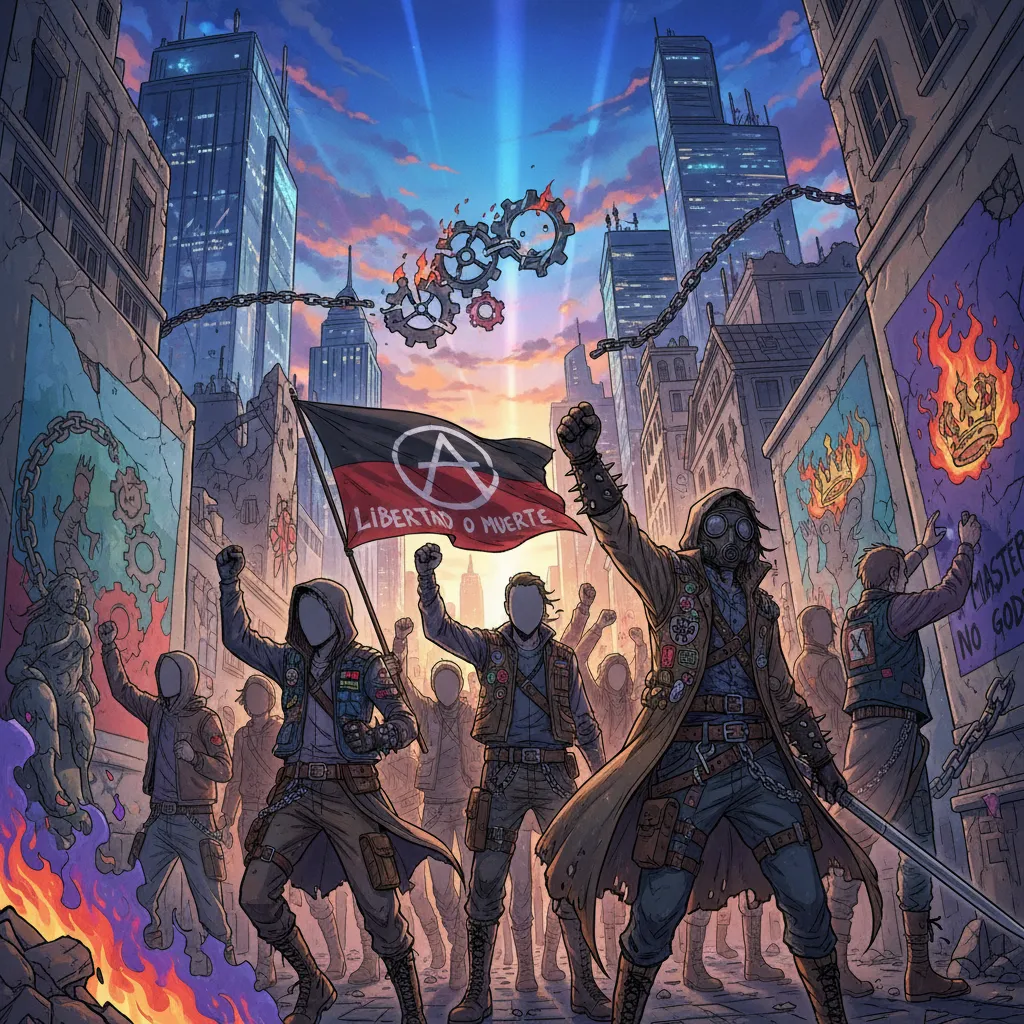
When we talk about love and revolution in poetry, we often imagine them as separate forces—one tender, the other fierce. But what if they are structurally identical? In this section, I present a poem that makes a bold claim: Love is structured like Revolution. This piece moves through three escalating stages—Revolution, Dictatorship of the Proletariat, and Communism—using repeated lines and sharp imagery to break down the boundaries between the personal and the political. The poem refuses sentimental comfort, instead insisting that both love and revolution are acts of rupture, not safety. The refrain, “Love is structured like Revolution,” hammers home the connection, while destructive images—bricks, Molotovs, tear gas—frame love as insurgency rather than idealism. The final call, “LOVERS OF THE WORLD UNITE!” is both ironic and earnest, echoing Marxist slogans while insisting on the inescapable force of human connection. This is revolutionary love poetry that uses the structure of political poems to make its point: Communism is not love; it is a hammer.
The Negation of the Negation is a Three Step Waltz
Step #1 Revolution
Love is structured like Revolution.
We trade the chains of oppression
for the clarity of disillusionment.
Love is structured like Revolution.
Shuffling, alienated,
bound by our own ideological code,
we encounter the face
that radicalizes our place.
Love is structured like Revolution.
Fidelity sworn not to God or Truth,
but to the shard of the Event
that fractures the social pathology.
Love is structured like Revolution.
The Molotov cocktail is self-defense.
The brick hurled through the corporate window
is the currency of emancipatory hope.
Love is structured like Revolution.
It is the zeitgeist of spite,
the smile twisted by tear gas,
hands gripped tight against the baton’s arc.
Love is structured like Revolution.
When the drone cleanses war,
non-violence loses its essence.
The body is the final argument:
fire against the conquest of the third world.
Love is structured like Revolution.
There is no "Revolutionary Situation"—
only discontinuous errors
we leap onto.
Love is structured like Revolution.
Reform leaves the means intact.
We must build from the known blueprint
of what we could become.
Love is structured like Revolution.
There is no outside of Empire;
everything is already tainted.
Step #2 Dictatorship of the Proletariat
Love is structured like Revolution.
Let us harbor no illusions—
there is no Objective Judge.
Truth is contingent:
when contexts change,
Gods change.
Love is structured like Revolution.
The first gasp of a new truth
is never TRUTH intrinsically.
The dialectic must run its ruthless course:
We crash; we contradict; we synthesize.
Love is structured like Revolution.
Failures are "right steps in the wrong direction."
Subject our flawed comrades
to the sharp edge of criticism.
Love is structured like Revolution.
Doubt is the only rational starting point
in a society god-ed by humanity.
Love is structured like Revolution.
Bipartisanship is a liberal delusion:
win the party as a whole
or crush the remainder.
Love is structured like Revolution.
The means must become
what the end demands.
Communism is not love;
it is a hammer.
Step #3 Communism
Love is structured like Revolution.
You may think that you are in love,
but don’t be fooled, you are in fact
in love.
LOVERS OF THE WORLD UNITE!
Dialectical Waltz Machine: Process, Not Product
The poem’s structure is not accidental. Its three steps mirror the dialectical process: thesis, antithesis, and synthesis. This is not just a formal choice, but a way to show that both love and revolution are ongoing processes—machines that produce change, not static states. The poem’s refrain, “Love is structured like Revolution,” insists on this parallel. The waltz is not a gentle dance, but a series of ruptures and recombinations, echoing the schizoanalytic focus on breaking down capitalist ideology and exposing how desire is always political.
Stage 1: Fidelity to Rupture (The Event)
The first movement, Revolution, centers on what schizoanalysis calls the Event: a rupture that shatters the status quo. The subject is not defined by a stable identity, but by fidelity to the Event—a commitment to the moment that breaks through ideological chains. In the poem, this is shown as a willingness to trade “the chains of oppression for the clarity of disillusionment.” Desire here is not a private longing, but a force that emerges from and acts upon the social field. The “face that radicalizes our place” signals that love, like revolution, is triggered by encounters that disrupt our ideological comfort. This is a key concept in schizoanalysis poetry: desire is always shaped by, and shapes, the political context.
Stage 2: The Logic Engine—Mutable Truth and Self-Critique
The second movement, Dictatorship of the Proletariat, introduces what I call the Contingency-Logic-Engine. Here, the poem insists that “there is no Objective Judge. Truth is contingent: when contexts change, Gods change.” This is a direct critique of any fixed or pure truth, echoing schizoanalysis’s suspicion of transcendental ideals. The dialectic here is ruthless: “We crash; we contradict; we synthesize.” The poem’s demand for “ruthless criticism” and the embrace of doubt as a starting point shows that the subject must constantly interrogate itself and its comrades. Purity is replaced by self-critique, and the means of revolution must be as uncompromising as the ends. This is the aesthetic of spite: hope and change are forged through destruction and confrontation, not affirmation or reconciliation.
Stage 3: Synthesis—Violence Dissolves into Ironic Revelation
The final movement, Communism, delivers the poem’s most ironic twist. After all the violence and dialectical struggle, the poem concludes, “you may think that you are in love, but don’t be fooled, you are in fact in love.” This is the Ironic Synthesis: the machinery of revolution and critique collapses into the simple, undeniable fact of human connection. Schizoanalysis here shows that, despite all attempts to break down and reconfigure desire, it always returns to the social—love as the final, inescapable bond. The poem’s structure echoes the schizoanalytic process: it breaks down the subject, exposes the violence of change, and then reveals that connection is the only constant.
The dialectic must run its ruthless course: We crash; we contradict; we synthesize.
By reading the poem through schizoanalysis, we see how key concepts schizoanalysis poetry—rupture, contingency, critique, and synthesis—are not just philosophical ideas, but lived processes. Love and revolution are both destabilizing forces, machines that disrupt the social fabric and remake it in new forms. In this way, the poem stands as a powerful example of philosophical contemporary poetry that refuses sentimentality and insists on the political nature of desire.
TL;DR: This blog post delivers one knockout poem, its direct schizoanalytic reading, and an intro—all in a compact, thought-provoking package. We untangle how revolution and love swirl together, revealing what it means to trade naïve hope for the harsh clarity only real change (and real connection) demand.
Comments
Post a Comment