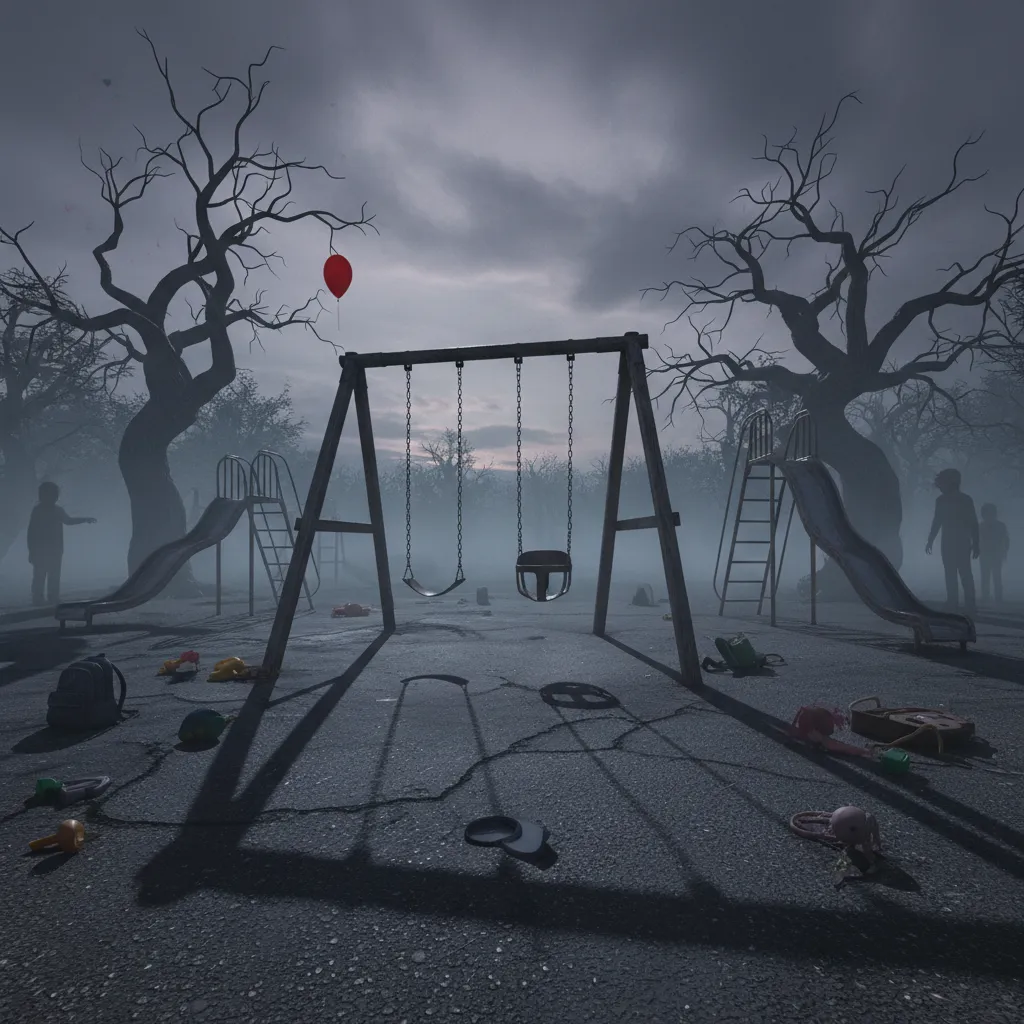
There is a violence to the poem that refuses to be ignored, starting with the immediate failure of its own title. School Yard Bliss promises innocence and happiness, but the very first image—blood dripping from a nose—shatters that expectation. This jarring shift in tone is not just a poetic device; it’s a direct confrontation with the themes of violence and trauma in poetry. The poem is brief, but its intensity is undeniable.s
Schoolyard Bliss
Blood drips from my nose
Puddling on the ground
Stumbled back
Two Superimposed images
Sliding back into place
Staring into those empty eyes
I thought about machines
Uses to core apples
The poem operates as a Bliss-Filter Apparatus, a psychic defense mechanism where the traumatic event is instantly processed and re-territorialized by the mind's need for stability. The initial violence—the blood, the stumble—is raw body-data, but the subsequent vision of the "Two Superimposed images / Sliding back into place" represents the failure of the subject to maintain a pure rupture. The images are a conceptual device for the self attempting to overlay the violence (the blood on the ground) with the required normalcy (the "School Yard Bliss"), with the sliding motion being the brief, terrifying moment of pure cognitive instability before the filter resets. The encounter with the aggressor is not one of emotional conflict, but of cold, mechanical recognition: the Apple-Coring Mechanism. Staring into "those empty eyes," the subject realizes the violence is impersonal, not an act of rage but a function, a utility. The eyes are not seen as human but as a part of a machine designed to extract the inner substance, the "core" of the victim, without passion or malice. This thought about machines deterritorializes the school yard into a factory floor, equating the body’s trauma with the indifferent efficiency of industrial production. The violence is not about anger; it’s about the mechanical extraction of selfhood, leaving only the husk behind, ensuring the system—the school yard—can quickly resume its nominal state of bliss. The poem’s fragmented structure mirrors this cognitive snapping, a series of quick, brutal flashes that never quite cohere into a traditional narrative, leaving the reader trapped in the ambiguity between the image that was and the image that is meant to be.
Comments
Post a Comment