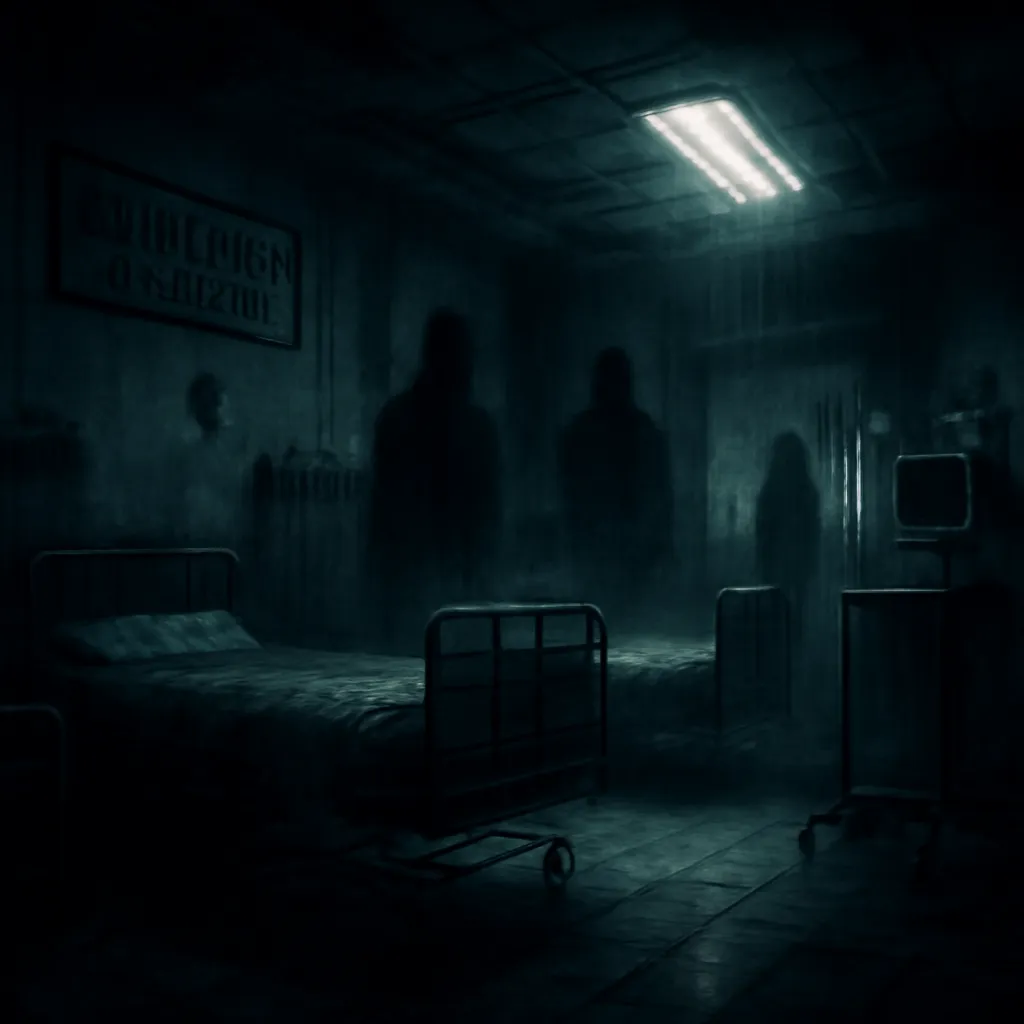
There’s a particular kind of American poetry—raw, cynical, sharply funny—that emerges from wrestling with broken institutions. As someone who spent a week wrangling with a malfunctioning pharmacy line (result: a single bottle of cough syrup and a dozen bruised nerves), this poem hit close to home. It’s a frank, darkly comic letter to a doctor at the Detroit VA, exposing the absurdities and heartbreaks of seeking help in a system stretched to (and sometimes past) its limits. What follows is the poem in full, followed by an unapologetically subjective, schizoanalytic riff—because sometimes the best diagnosis is to tear up the form itself.
Chaos, Absurdity, and the Broken Healthcare Machine
The following poem, written as a secure message to a VA Detroit Health Care provider, captures the raw frustration and absurdity experienced by many veterans navigating the labyrinth of Veterans Affairs. The speaker’s voice is unfiltered, swinging between dark humor and genuine despair. Themes of systemic incompetence, bureaucratic inertia, and the emotional toll of medication delivery issues are woven throughout. The poem’s imagery—gimp suits, brown stains, and the relentless beep of a flatline—offers a visceral critique of the Detroit VA’s Mental Health Services and the broader failures of the system.
Dear Dr. Stromberg
Secure Message:
15 38 22JAN2020
I have a lot of paranoid thoughts.
But I am now convinced the Detroit VA isn't even competent enough to be out to kill me.
The Dingell VA Hospital is suicidally incompetent
and dancing in a gimp suit of poor leadership.
I just got off the phone with the pharmacy line.
Sensing I was about to be transferred I stated,
"Please don't hang up on me or transfer me to a phone number that just rings and rings, like the last two VA staff did."
38 minutes.
No hold music.
She returned.
I was informed that rather than answer the phone outpatient staff the Detroit VA picked up the phone and then hung up on her.
She also pointed out that she can tell that the employees are in the office because she can see the employees on skype and sent them a message to answer their phone.
ALSO, she informed me that there was no address error.
The one-month supply of Prozac was not delivered and returned to the Detroit VA.
Why wasn't the medication Delivered? You can thank the Mount Clemens post office and their carriers who have been failing to make delivery attempts for over two years. They don't ring my bell. I've been in my apartment for the failed delivery attempts.
When I voiced these concerns to the post office, The assholes called the police on me .
They even set the carrier out to me, who chewed on a shit-eating grin. I pointed out his smile makes me feel like he's not taking me seriously. The Mt. Clemens delivery carrier informed me he was smiling to keep from being angry.
The motherfucking Detroit VA.
The dingellberry that never dropped.
The brown stain in Detroit's boxers.
Rather than contact me to tell me about the medication being returned to the Dingell VA
some asshat marked it as an address error.
That apparently nobody can find, or identify.
Dr. Stromberg, it is unfortunate that you can't trust your coworkers to tell the truth.
And even more unfortunate
that you believe their lies knowing better.
I wonder how many other veterans this shit happens to
because the Detroit VA is allergic to accountability.
Addicted to lies.
Greetings and Salutations from a veteran 24 hours away from a Prozac withdrawal.
MEDIC!
MEDIC!!!!!!
MEDIC????
Where the fuck is the MED.....
Beep
Beep
Beep
FLATLINEDundefined
Mapping the Fractured Machine
The poem is a living diagram of the broken machinery that defines VA Detroit Health Care for many veterans. Each stanza is a circuit—sometimes open, sometimes shorted—where communication fails, accountability dissolves, and the veteran’s voice ricochets through empty channels. The speaker’s 38-minute wait on hold is not just a personal anecdote; it’s a microcosm of systemic inertia, a lived metric of time lost to bureaucratic dead air.
The language is jagged, oscillating between accusation and resignation. The phrase, “The Dingell VA Hospital is suicidally incompetent and dancing in a gimp suit of poor leadership,” is both grotesque and precise. It conjures an institution so entangled in its own dysfunction that it becomes a parody of itself—leadership bound and masked, flailing without direction. The “gimp suit” is not just costume, but constraint; it signals a system that cannot move freely, cannot respond, cannot care.
Absurdity is weaponized as survival. The speaker’s dark humor—referring to the Detroit VA as “the dingellberry that never dropped” and “the brown stain in Detroit’s boxers”—serves as both shield and scalpel. It exposes the indignity of repeated medication delivery issues and the emotional violence of being dismissed or misunderstood. The poem’s escalating pleas for a “MEDIC” devolve into the mechanical “Beep… Beep… Beep… FLATLINED,” a sonic flatline that stands for both medical crisis and institutional apathy.
Research shows that the VA Detroit Health Care system has faced ongoing criticism for communication breakdowns and delivery inefficiencies. Veterans Affairs processes, especially around Mental Health Services and medication delivery, can result in significant delays—sometimes with life-altering consequences. The poem’s recurring motifs—faceless authority, avoidance of accountability, emotional escalation—mirror these documented realities. The speaker’s experience is not isolated; it echoes the frustrations of countless veterans who find themselves trapped in a system allergic to transparency and addicted to denial.
The poem is not just a complaint. It’s a map of affective flows, blockages, and ruptures. The veteran’s body and mind are caught in the gears of a healthcare machine that grinds but does not heal. The poem’s final flatline is not only a metaphor for personal crisis but a diagnosis of the system itself: a machine that, in failing to deliver care, delivers only silence.
Comments
Post a Comment