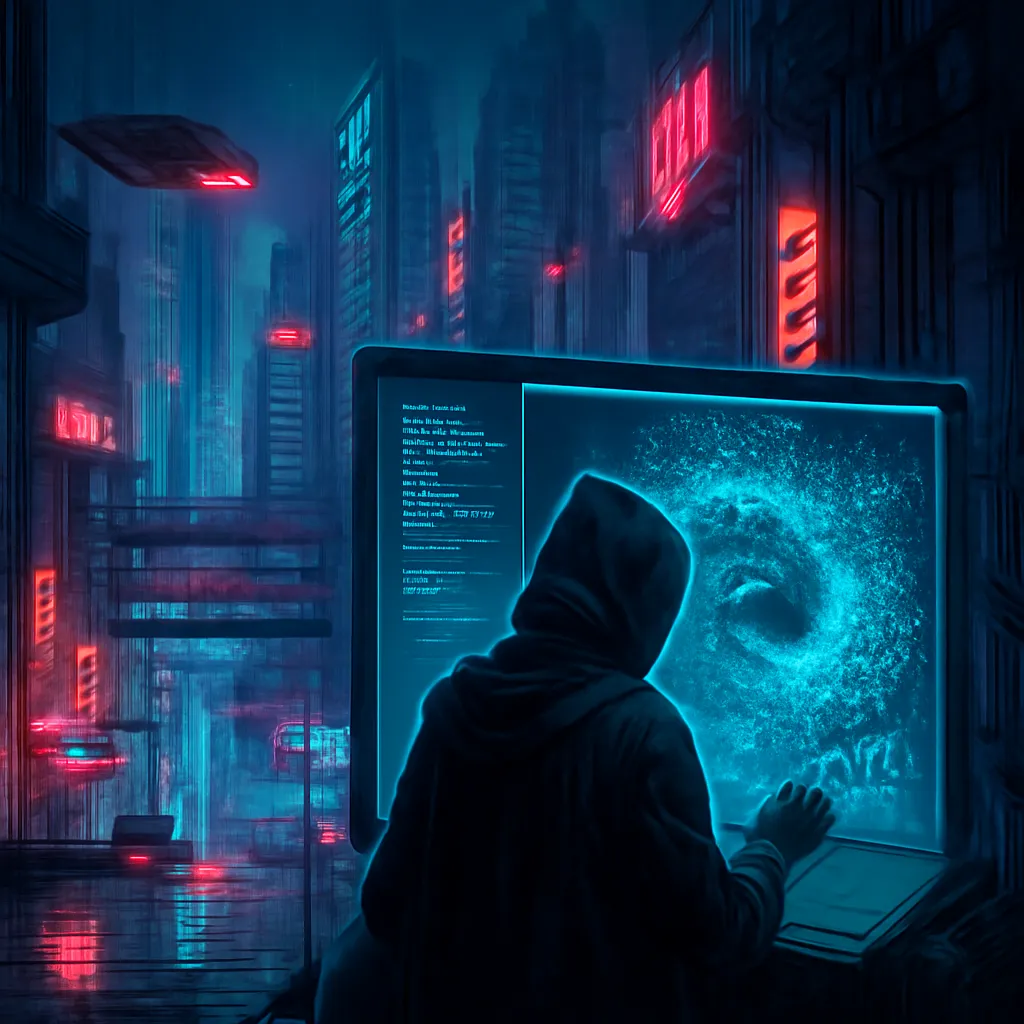
What if, just for a second, we lit a match to all our screens, Kindles, and tabloid newsfeeds, and entertained the fantasy of deleting the internet? It’s not every day someone suggests burning our digital lifelines, but that’s exactly what this razor-edged poem does — stirring memories of rotary fans, MTV anxiety, and dot matrix printers. Before you jump to defend your favorite meme account, let’s step into the satirical melee, where cultural icons clash with philosophical heavyweights and laughter masks a glint of existential uncertainty. Time to meet the poem that throws down the gauntlet, and see what happens when we schizoanalyze its delirious terrain.
Confronting the Digital Specter
Contemporary poetry themes in 2025 have become inseparable from the digital world’s relentless churn. The poem below, “Delete the Internet,” launches readers straight into a landscape of digital overload, anti-consumerist satire, and technological alienation. It’s a terrain littered with the debris of pop culture and the icons of information age excess. Here, the familiar—Microsoft’s broken windows, the Taco Bell dog, the Marlboro Man—drift through a surreal assembly, each image a fragment of collective memory and critique. The poem’s chorus, ‘All those who agree? Aye! Aye! Aye! Aye! Aye!’, echoes the tribalism of online forums, where agreement is measured in upvotes and dissent is drowned in the noise.
There’s a sly nostalgia at play, too. Rotary fans and fax machines appear as technological relics, reminders of a time when sending a message meant crossing your fingers and hoping the machine didn’t jam. The poem’s existential questioning—“Refriend your soul / Solve for X”—invites readers to consider what’s lost in the digital deluge, and what it might mean to reclaim a sense of self amid the static.
Delete the Internet
Burn All Kindles!
Exile the Information Idolaters!
Reformat the Tabloids!
I second that
Let’s
Bring
It
To
The
Floor!
All those who agree?
Aye! Aye! Aye! Aye! Aye!
Court Reporters Tally...
Yes, from Microsoft’s Broken Window.
Yes, from the Nebraskan gentlewoman in the Ford PickUp Truck overcompensating for her boyfriend’s lack of existence.
Yes, from the severed tail of the Lizard from Gieco.
Yes, from what’s left of the essence of whatever scared parents about MTV.
Yip! Yip! Yip! from Taco Bell dog on the video monitor chewing on what’s left of Marlboro Man
Thanks again to Men’s Auxiliary of Mothers Again Drunk drivers for the generous sacrifice.
Do I have any nays?
Nay! NAY! NAY! NAY! NAY! NAY! NAY!
NAY! NAY! NAY! NAY! NAY! NAY!
Oh, it’s Socrates and his Twelve Patient Women! Again! And again! Always starting shit!
Socrates noticed that his feet were not in slippers, he was not ripping pages one by one from the Necronomicon-DeusEx-Categorial-Imperative, and he didn’t feel the cooling breeze of the rotary fan, or the weight of the 40oz slipping into...
The Woman Spoke In Unison
And the glorious papers
Methodological Churned
From 12 angry
USB Compatible
Dot Matrix Printers.
DELETE THE INTERNET!
Refriend your soul
Solve for X
Appendix:
Fax Cover Sheet:
Greetings and Salutations,
The Great and Powerful
Uni-Bath Bomber
Mapping Constellations and Flows
The poem’s existential terrain is not a fixed landscape but a shifting constellation of cultural symbols, technological relics, and mythic echoes. Guattari’s schizoanalytic cartographies offer a lens through which to map these poetic assemblages—not as static meanings, but as dynamic flows and ruptures. Here, the information idolaters are not merely satirical targets; they are nodes in a network of signification, echoing Guattari’s critique of how meaning is commodified and circulated in digital culture.
Each reference—Microsoft’s broken window, the Taco Bell dog, the Marlboro Man—functions as a point of entry into broader existential territories. These are not just pop-culture throwaways; they are artistic constellations that collide, overlap, and mutate. The poem’s chorus of “Aye! Aye! Aye!” becomes a refrain, a digital mob’s affirmation, mirroring the upvote culture and tribal consensus that dominate online spaces. The echo of Socrates, forever “starting shit,” disrupts the flow, introducing philosophical skepticism into the mix, and refusing any easy resolution.
Research shows that contemporary poetry in 2025 increasingly leverages such cultural mashups to critique the saturation of information and the erosion of individual identity. The schizoanalytic approach does not seek to decode these references in a traditional psychoanalytic sense. Instead, it traces how they assemble, disperse, and reassemble—how they map onto lived experience, social turbulence, and aesthetic refrains. The poem’s invocation of technological artifacts—fax machines, dot matrix printers—serves as a reminder of the material flows underpinning digital life, even as they become obsolete.
In this poetic landscape, the existential flows are restless. The call to “DELETE THE INTERNET!” is both a satirical outcry and a genuine yearning for escape. The poem’s closing lines—“Refriend your soul / Solve for X”—gesture toward the possibility of new subjectivities, new zones of experience, beyond the reach of digital idolatry. The schizoanalytic reading, then, is less about interpretation and more about mapping: following the lines of flight, the ruptures, the zones where meaning is still in play.
TL;DR: Beneath its absurdist surface, the poem "Delete the Internet" delivers a biting anti-digital satire, inviting a schizoanalytic reading that foregrounds existential refrains, artistic detours, and a playful subversion of psychoanalytic norms.
Comments
Post a Comment