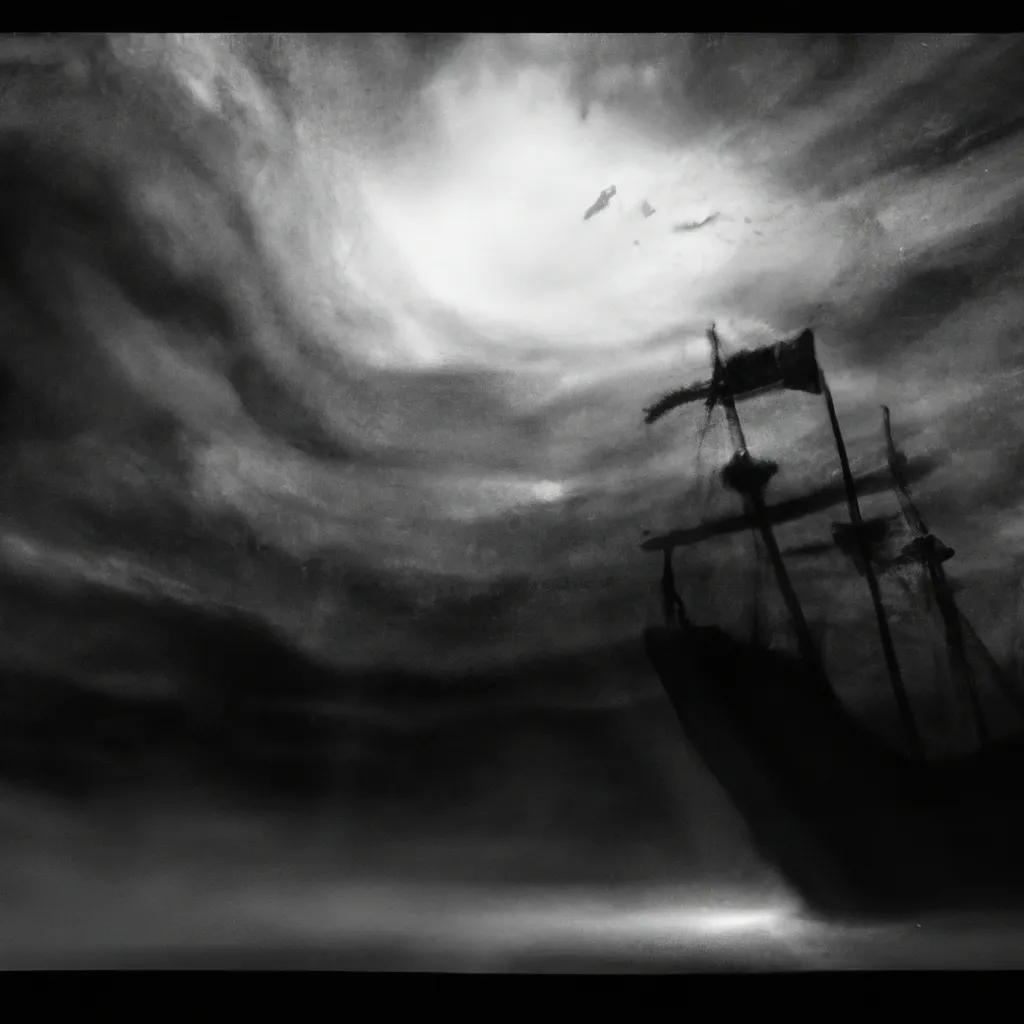
There is a drift in me—left behind by tides, never named on any map. A memory: watching the horizon split in three, before knowing numbers or the names of the dead. Today, language is my vessel, and I’ll let it founder in the surf. Here’s a diary entry with the spine torn out, after a night where I dreamed I could not drown, no matter how heavy my thoughts. If you need a lifeboat, look for a question mark that forgot what it was asking.
Islands in the Static: Life, Death, At Sea
A day recorded as a glitch. I wake, or maybe I don’t. The sun skips, starts again, forgets to finish. I pour coffee into a cup that isn’t there. The cup is a memory, or a promise, or a hole in the table. The table is a raft, drifting. I am not sure if I am living, dead, or simply at sea. The static on the radio is louder than the news. The news is always about someone else, but the static is mine.
Once, I noticed a neighbor who tended clocks. He wound them, polished the glass, set the hands to the hour he preferred. I never asked if he believed in time. Maybe he just liked the ticking, the way it filled the rooms with something that wasn’t silence. Maybe he was living. Maybe he was dead. Maybe he was at sea, counting seconds as if they were waves.
The living arrange furniture. The dead rearrange the dust. I move a chair, and the sunlight shifts. Shadows gather in the corners, waiting for instructions. I give none. The dust settles, then rises again when I leave the room. The dead are patient. The living are restless. At sea, I mistake driftwood for a signpost, but nothing points home. The ocean is a room with no furniture, no dust, just the endless rearrangement of water and sky.
I try to write a list of the three types of people. The pen skips, the paper tears. I write: the ones who gather shells for stories, the ones who use them as earplugs, the ones who throw them back to the tide. The list refuses to end. The categories leak into each other, saltwater in the ink. The quote echoes, but the echo is not the same as the voice. I am not the same as yesterday, or tomorrow, or the moment before the glitch.
The living gather shells for stories. The dead use them as earplugs." – Elena S. P. Moore
Sometimes I think about boundaries. The line between land and sea, life and death, furniture and dust. The line is a suggestion, not a rule. I step over it, or under it, or ignore it completely. Deleuze and Guattari once said (or maybe they didn’t) that boundaries are constructs, metaphysical fences built to keep out the weather. But the weather always finds a way in. Rain through the roof, wind through the cracks, static in the wires.
Language skips, starts again, forgets to finish. I say alive, but the word slips from my tongue and falls into the water. I say dead, but the echo is laughter, or thunder, or nothing at all. I say at sea, and the room tilts, the furniture slides, the dust dances. The narrative is non-linear, a spiral, a wave, a glitch in the diary. Research shows that non-linear narrative philosophy disrupts the comfort of resolution, leaves projects incomplete, like a diary with missing pages.
Meaning is found in broken routines. I brush my teeth with the wrong hand. I eat breakfast at midnight. I forget my own name, remember someone else’s. The living, the dead, the sea-drifters—none of them fit the labels. The categories sabotage themselves, drift apart, then collide in the fog. The static is a kind of music, a prophecy, a warning. I listen for patterns, but the patterns are always changing.
Sometimes I dream of islands. Not land, exactly, but pauses in the static. Places where language rests, where the glitch is the rule, not the exception. I wake with sand in my mouth, salt on my skin. I am not sure if I am living, dead, or at sea. I am not sure if it matters. The diary disassembles itself, page by page, word by word. The story is a shell, hollow and resonant, waiting for someone to listen or to block their ears.
Three types people quote analysis? The analysis is the drift, the rearrangement, the refusal to finish. Deleuze and Guattari would approve, or they would laugh, or they would turn the page and start again. There are no signposts. There is only the static, the glitch, the endless rearrangement of dust and water and words.
Mutiny of Signs: On Freedom Through Language Disruption
There are three at sea. The living, the dead, and the ones who drift between—salt in their hair, language in their teeth, and no shore in sight. I woke with my name spelled in salt on the deck, each grain a letter, each letter a promise: dissolve, dissolve, dissolve. Freedom through language disruption isn’t a theory here. It’s the taste of brine on my tongue, the way every and leaks water into the hull. The more I write, the more the boat sinks. The more I bail, the heavier the words become.
Every sentence is a plank. Every plank is warped. I hammer conjunctions into place, but the sea pries them up. And is a leak. But is a wave. Or is a gull that won’t land. I try to build a raft from grammar, but the ocean edits it into knots and riddles before I can even see the horizon. This is prophetic language in contemporary writing: the message is always already rewritten, always already lost, always already found again in the driftwood of meaning.
I write a message in a bottle. I throw it overboard. The sea takes it, shakes it, unscrews the cap, and pours in its own alphabet—tangled, salt-stained, unreadable. By the time it washes up, the words have grown fins. They swim away before anyone can read them. Experimental blog writing styles? No. This is not style. This is survival. This is the only way to breathe when the air is thick with signification and the sky is a ceiling of unread footnotes.
There’s no prescribed salvation here. No map, no compass, no lighthouse blinking out the answer. Just the mutiny of signs, the way language refuses to obey. I try to anchor my thoughts, but the tide pulls them loose. “Prophecy is the tide. The tongue cannot swim it, nor the pen anchor it.” Mira H. Jansen said that, or maybe the sea did. I can’t tell anymore. The quote floats by, barnacled and bright, and I grab hold for a moment before it slips away.
Freedom through language disruption isn’t a destination. It’s a process, a storm, a diary disassembled by wind and water. I watch the sentences scatter. Some sink. Some float. Some circle back, changed, unrecognizable. I try to gather them, but my hands are full of salt and syllables. The more I collect, the more I lose. The more I lose, the more I find—strange, prophetic fragments that refuse to settle into meaning.
There are three at sea. The living count the waves. The dead count the stars. The ones at sea count nothing, because numbers are just another leak, another way for the ocean to get in. I try to count my thoughts, but they slip through the cracks. I try to name my freedom, but the name dissolves before I can speak it. I dreamt my name was spelled in salt, promising freedom with every dissolution.
Defying blog conventions philosophy is not a rebellion. It’s a necessity. The blog is the boat, and the boat is always sinking. The only way to stay afloat is to let the water in, to let the language break and flood and carry me somewhere new. I don’t know where I’m going. I don’t know if I’m living, dead, or just at sea. I only know that the signs have mutinied, and I am drifting with them, unmoored and unafraid.
Every and is a leak. Every sentence is a wave. Every word is a bottle thrown into the unknown. The ocean edits everything, and I am grateful for the riddles. Prophetic language contemporary writing is not a style. It’s a storm. It’s a freedom that tastes like salt and sounds like silence between the lines. I write, I drift, I dissolve. The mutiny continues.
Assemblages in Drift: Diary Scraps and New Cartographies
Jotted in the margins: My calendar lost all its Thursdays. I keep looking for them, as if they might be hiding behind the couch cushions with the missing socks and the receipts for things I never bought. Is that a symptom, or a navigation technique? I can’t tell anymore. The living, the dead, and those who are at sea—three types, or just three ways of forgetting which day it is? I drift between them, sometimes all at once, sometimes not at all.
Today, I tried to string dead memories into a raft. The trick is to use only the ones that refuse to sink. The rest, the waterlogged ones, they just dissolve in your hands, leaving behind a taste of salt and the faint outline of a face you once knew. I lashed the memories together with bits of old conversation, scraps of laughter, and the odd regret. The raft wobbled, but it held. For now. Maybe it will carry me to the next concept-island, or maybe it will just circle endlessly, a spiral with no center.
I remember an interlude: once argued with a pelican about property rights. It won, of course. It always does. It flew away, leaving me with its hunger for open space. I tried to fill it with maps, but the maps kept changing, the borders bleeding into each other, the names of places melting into nonsense. Every time I thought I had found a shore, the tide pulled it away. The pelican never came back, but sometimes I see its shadow, gliding over the water, reminding me that ownership is just another kind of drift.
The diary fragments itself. Events, concepts, time—none of them line up neatly. I write in the cracks between things, in the pauses and the stutters. My handwriting gets worse the further I go. Sometimes I can’t read what I wrote the day before. Sometimes I don’t want to. The diary is a vessel, but it leaks. That’s how the new thoughts get in. Non-linearity isn’t a flaw; it’s the point. Novelty seeps through the seams, and I let it. I have to. Otherwise, I’d just be repeating myself, and the sea hates repetition.
I keep thinking about assemblages. Not as things, but as movements. A flock of birds, a swarm of doubts, a calendar with no Thursdays. Each piece connects to the next, but not in any way I can predict. I resist the urge to pin them down, to make them mean something fixed. Instead, I let them drift, colliding and separating, forming patterns that last just long enough to notice before they dissolve. This is the only way I know how to map the territory: by refusing to settle, by choosing movement over stability.
Sometimes, I invent anecdotes just to see if they’ll float. Like the time I tried to teach a stone to swim. Or the night I listened to the wind recite poetry in a language I almost understood. These stories aren’t examples; they’re riddles. They don’t explain anything. They just open up space, make room for something else to happen. Maybe that’s what it means to be at sea—not lost, but open, always ready for the next wave, the next interruption.
"Rafts are best built from what refuses to sink." – Julien Laurent
I end here, but not really. The diary is always in progress, always fragmenting, always assembling itself anew. Each entry is a map that leads nowhere in particular, but the act of mapping is enough. The living, the dead, those at sea—we’re all just trying to find a way to float. If you find my Thursdays, keep them. I’ve learned to navigate without them.
TL;DR: On the water, on the page—life, death, and the always-fleeing: none are as they seem. Break the meanings open and let new concepts spill into the tide.
Comments
Post a Comment